Is It Bad for Your Knees to Go Past Your Toes?
Jul 22, 2026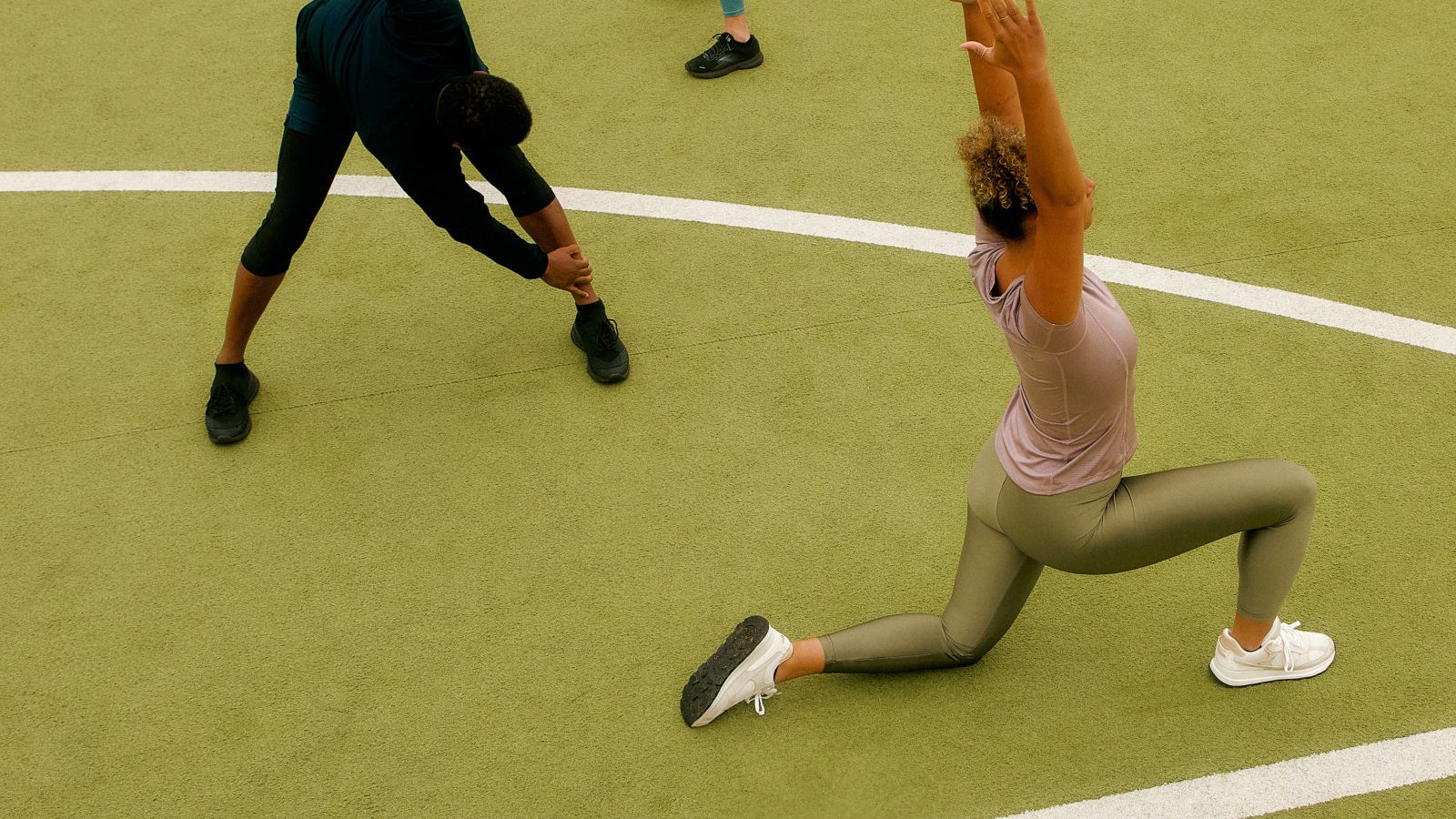
Short answer, and I will not make you scroll for it: no, it is not inherently dangerous for your knees to travel past your toes. For most people, in most postures, the knee drifting forward of the toes is a totally normal, trainable range of motion (not some ticking injury time bomb waiting in the wings). You do it every time you walk down the stairs. You do it every time you flop into a squat to dig around the back of the bottom cupboard for the good snacks. The nuance, and with me there is always nuance (sorry, not sorry), is about load, control, and context. So let's meander through it together.
Buckle up, buttercup. This little rule has been kicking around gyms and yoga rooms since roughly 1996, and it deserves better than a blanket yes or no.
Where the "knees past toes" rule even came from
I want to be fair to it, because this cue did not come from a bad place. It came from harm reduction (which, honestly, respect). The logic went something like: the further your knee travels ahead of your toes, the more range of motion you need, specifically more dorsiflexion at the ankle, and more range means more demand, and if someone does not have that range or the strength to control it, then keeping them stacked and vertical felt like the safe bet.
Well intentioned! Genuinely! The trouble is what happens when a reasonable little caution slowly calcifies into a Universal Law Of The Body that gets stamped onto every single person, in every single posture, for all eternity. That is where the whole thing quietly falls apart.
What is actually going on in the joint
Let's zoom way out for a second, because when we get stuck in alignment rules, we have a real habit of losing the forest for the trees (and then walking directly into one of the trees).
Every time you walk up or down the stairs? Knees past toes. Comfortable hanging out in a deep squat? Knees almost certainly past toes. This is a normal, available range of motion in most bodies. Your knee is not going to spontaneously combust because it wandered forward in a lunge. Your Achilles is not going to dramatically rupture because your shin angled forward one time in crescent.
Does the forward travel of the knee ask a bit more of you than a perfectly stacked, vertical shin? Sure. And most people already have the room to train exactly that. The range itself is not the villain here (I know, I know, we do love a good villain).
Fear is not a cue
This is the part where I get a little fired up, stay with me. When we stand at the front of the room going "don't do this, careful, not that, careful, careful," something sneaky happens underneath all of it. We start to install fear. And fear does not politely stay up in the head, it moves right on into the body.
There is even a word for it: the nocebo effect. A placebo is when you expect something good and your body obligingly delivers, no real stimulus required. A nocebo is the grumpy evil twin: you get told something is scary or fragile or dangerous, so you brace and you guard and you quietly start to believe your body is made of glass. And that belief becomes its own little cage.
My whole thing runs the opposite direction, toward anti-fragility. Bodies are strong. Bodies are resilient. And the coolest part, the part I will genuinely never shut up about: bodies are adaptable.
The better question is not "is it safe," it is "is it trained"
This is where the actual answer lives and (shocking, I know) it is not a tidy little yes or no. It is a question fired right back at you: do you, or your student, have real strength and control in that range?
Context is doing a lot of heavy lifting here. Loading a heavy barbell across your back? Okay, now "how far past the toes" is a genuinely bigger conversation. Sprinting, cutting, pivoting at speed? Also a different animal. But in a yoga practice, most of those wild variables are already tucked safely away. Nobody is going to slide tackle you from behind (and if they are, we have bigger problems). There is no rogue gust of wind waiting to bowl you sideways. The floor is even, the pace is yours, and you have all the time in the world to actually notice what you feel.
So when we tell a student "don't, it's dangerous," or "keep that knee stacked to protect your knee," we are usually handing them a rule with exactly none of the why attached. And, gently, it is a little bit of a fib that the cue itself is the thing keeping them safe. We are not in their bodies. A lot of the time that cue is really just there to make us, the teachers, feel better. It is the precise energy of yelling "be careful, that's high" at a toddler from across the room. Comforting to say out loud. Not actually the thing holding them up. It is the illusion of control (and oof, do we love the illusion of control).
There are no dangerous postures, only untrained positions
Okay. This is the reframe I actually want you to walk away with, and I will be fully transparent that not every lineage or school of thought is going to hold my hand on this one. My honest take: there are no inherently bad or dangerous postures. There are untrained positions. There are spots on the map we simply have not filled in yet.
Wandering a pitch-black room with no flashlight is dicier than strolling a lit hallway, obviously. But that does not make the room dangerous. It makes it unknown. And unknown, we can absolutely work with.
Anybody who has done even a stitch of therapy already knows this one in their bones: avoidance is a garbage long-term strategy for building resilience (or a relationship, but that is a whole other newsletter). Same goes for your physical body. Avoidance is not protection. If we never ever let the knee travel forward, not even in a slow, stable, deeply controllable shape where you have infinite time to feel what is happening, then what on earth happens the day life just... demands that range anyway? You step off a curb a little funny, and your body has precisely zero experience there. That is when it actually gets dicey.
Exposure, in small and then slightly-less-small doses, is how you build tolerance that follows you off the mat and out into the rest of your gloriously unpredictable life.
When it does make sense to keep the knee stacked
All that said, "it depends" swings both ways (it always does). If someone is rehabbing an Achilles injury and there is a clear, specific reason to stay in a controlled range, then yes, stack that knee right over the ankle and call it a win. That makes complete sense for that person, in that season, for that reason.
Which is a wildly different thing from a blanket rule bellowed across a full room at every single body in it. The whole skill is learning to tell those two apart: when, where, how much, and for whom.
How to train the range (without the theatrics)
You do not need to hurl anyone, yourself very much included, into the deep end. Pick shapes where the movement is slow and the ground is generous. A chair pose. A lunge. The kind of place where you actually have a beat to assess what you feel as you explore it. Start small. Then slightly bigger. Unweighted before loaded. Bit by bit, on your own mat, this stops being a scary exception and just quietly becomes part of the practice.
Give your knees (and your students' knees) a little more credit, and a whole lot more movement diversity.
The takeaway for teachers
Next time you hear one of these rules or myths or tired old tropes trotted out for the ten-thousandth time (I rounded up five of the most common ones worth retiring if you want a hit list), I want one tiny lightbulb to flicker on: "hmm. That can't be all there is to it. There's got to be more to the story." Because, reader, there almost always is.
That flicker of curiosity, that willingness to actually think instead of parroting the binary, is the whole entire thing. It is what quietly turns you into the kind of teacher who can really see the real, wildly different humans standing in front of her.
Frequently asked questions
Is it bad for your knees to go past your toes in yoga? No. For most people, letting the knee travel past the toes is a safe, normal range of motion that you already use walking down stairs or squatting. It is not inherently dangerous.
Does letting your knees pass your toes cause knee injury? Not on its own. Injury risk has far more to do with load, speed, and whether you have trained strength and control in that range than with the simple fact of the knee moving forward.
Should beginners avoid letting their knees go past their toes? Not as a hard rule. In a controlled, stable posture like a lunge or chair pose, gently exploring that range actually helps build tolerance. The goal is gradual exposure, not avoidance.
When should you actually keep your knee stacked over your ankle? When there is a specific reason, like rehabbing an injury (an Achilles issue, for example) or working under heavy load, where staying in a controlled range is the smart call for that individual.
How do you train your knees to go past your toes safely? Start in slow, stable shapes where you can pay attention. Work small ranges first, then progress the depth over time, unweighted before loaded. Consistent, gradual exposure builds real strength and control.
Keep going down the rabbit hole with me
If you love this flavor of "wait, why do we actually teach that" thinking, it is honestly the whole beating heart of my work with teachers. My anatomy training for teachers digs into exactly this stuff (the mechanics behind the cues, so you can teach from understanding instead of habit), and the teach like you mean it. podcast picks off these burning questions one at a time. Come learn the why with me.